Contact us

Fill out the form below, and we will get back to you shortly to answer your questions.

Message sent! We will get back to you within 24 hours.
An error occurred while sending. Please try again or email us directly at: biuro@elpoffice.com
News

The National Labour Inspectorate (PIP) will be able to establish employment relationships without a court

Fundamental changes are taking place in Polish legislation that will directly affect every entrepreneur and foreign specialist. The law of March 11, 2026 (Act amending the Act on the National Labour Inspectorate) grants inspectors powers that previously belonged exclusively to courts.

For businesses and foreign professionals in Poland, this means the necessity to review current contracts. We explain how the new law will work and who it will affect first.

Deadlines and legal status of the reform

The new rules come into force on July 8, 2026. It is important to note that the law was sent to the Constitutional Tribunal for review, but this does not suspend its application. Starting in July, inspectors will begin working according to the new protocols.

The state has established a 12-month transition period. Companies that voluntarily bring their contracts into compliance with the actual nature of work within a year will be able to avoid liability for violations.

New procedure: from courts to administrative decisions

Before the adoption of the new amendments, a PIP inspector, upon discovering during an inspection that a person was working on an umowa zlecenie (civil law contract) but was actually performing the duties of a full-time employee, could only file a lawsuit in a labor court.

Court proceedings lasted for years.

Now the procedure becomes two-step and fast:

  1. Order: Upon finding violations, the inspector issues a mandatory order to eliminate them.
  2. Administrative decision: If the order is not fulfilled, PIP initiates proceedings and issues a decision on the existence of an employment contract.

Main change: the decision comes into force immediately regarding registration in the ZUS system and payment of taxes.

Now, it is not the inspector who goes to court to prove the employer's guilt, but the employer who is forced to go to court to challenge the already made PIP decision.

Digital supervision: automatic control through ZUS and KAS

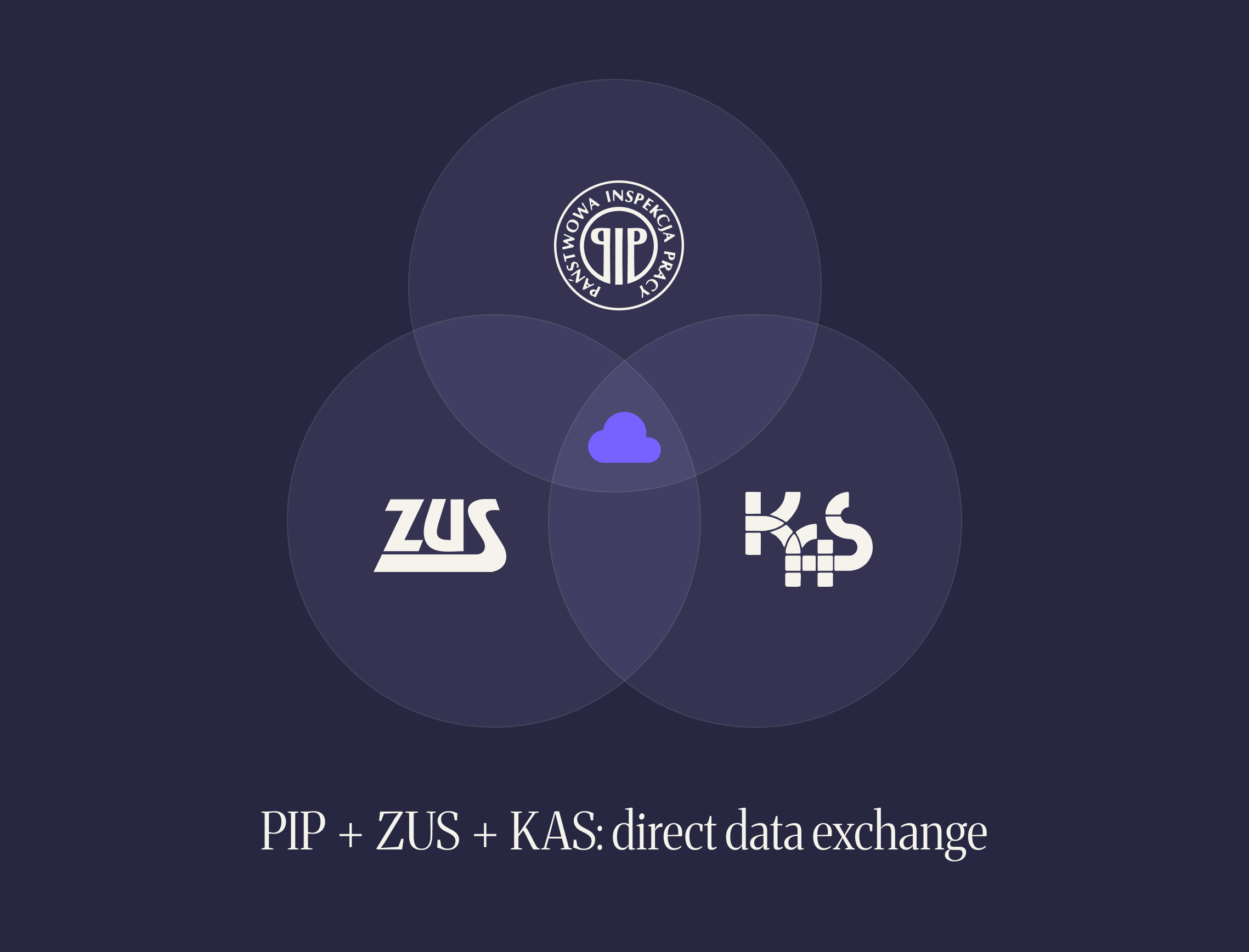
The era of random "complaint-based" inspections is a thing of the past. The reform introduces a system of automatic data exchange between three state authorities:

  • PIP (National Labour Inspectorate);
  • ZUS (Social Insurance Institution);
  • KAS (National Revenue Administration).

This means a transition to a model of digital supervision. Algorithms will be able to automatically identify companies whose payouts on B2B contracts or umowy zlecenie suspiciously resemble the fixed salary of a full-time employee.

In addition, the possibility of remote inspections is introduced, which significantly increases the coverage of the inspectorate.
Signs of a "hidden" employment contract

The inspectorate will look not at the name of the document, but at the actual working conditions (according to Art. 22 of the Labor Code of the Republic of Poland).

Your contract is at risk if the following are present:

  • Hierarchical subordination: execution of direct orders from management.
  • Time and place control: the obligation to be in the office or online at strictly defined hours.
  • Personal performance: the inability to delegate tasks to a subcontractor (critical for B2B).
  • Company tools: using the employer's equipment and software without having your own economic risks.

New fines: liability has doubled

The reform significantly increases financial pressure on violators. Fines for key articles are almost doubled:

  • For replacing an employment contract and violating employee rights: from 2,000 to 60,000 PLN.
  • For repeated or gross violations: up to 90,000 PLN.
  • For an attempt to "take revenge" on the employee (for example, terminating the contract immediately after a PIP inspection): a fine of up to 60,000 PLN.

In addition to fines, the PIP decision automatically obliges the employer to additionally charge all ZUS contributions and taxes for the entire period of the recognized employment relationship.

How to protect your business?

The state effectively transfers part of the judicial functions to the administrative sphere, lowering the level of procedural guarantees for businesses.

In these conditions, the only way to avoid huge fines is a preventive audit.

ELPOFFICE specialists will help you:

  1. Analyze current B2B contracts and Umowy Zlecenie for compliance with the new requirements.
  2. Identify the risks of "hidden employment relationships" before they are detected by the PIP algorithm.
  3. Develop a strategy for transitioning or adjusting cooperation conditions within the 12-month grace period.

Contact us for a consultation so that your business in Poland remains safe under the protection of professionals.

Need help with taxes or JDG?
The ELP Office team will help you understand the nuances of Polish legislation.

Heading 1

Heading 2

Heading 3

Heading 4

Heading 5
Heading 6

Lorem ipsum dolor sit amet, consectetur adipiscing elit, sed do eiusmod tempor incididunt ut labore et dolore magna aliqua. Ut enim ad minim veniam, quis nostrud exercitation ullamco laboris nisi ut aliquip ex ea commodo consequat. Duis aute irure dolor in reprehenderit in voluptate velit esse cillum dolore eu fugiat nulla pariatur.

Block quote

Ordered list

  1. Item 1
  2. Item 2
  3. Item 3

Unordered list

Text link

Bold text

Emphasis

Superscript

Subscript

Latest articles

The National Labour Inspectorate (PIP) will be able to establish employment relationships without a court

Deadlines and legal status of the reform

The new rules come into force on July 8, 2026. It is important to note that the law was sent to the Constitutional Tribunal for review, but this does not suspend its application. Starting in July, inspectors will begin working according to the new protocols.

The state has established a 12-month transition period. Companies that voluntarily bring their contracts into compliance with the actual nature of work within a year will be able to avoid liability for violations.

New procedure: from courts to administrative decisions

Before the adoption of the new amendments, a PIP inspector, upon discovering during an inspection that a person was working on an umowa zlecenie (civil law contract) but was actually performing the duties of a full-time employee, could only file a lawsuit in a labor court.

Court proceedings lasted for years.

Now the procedure becomes two-step and fast:

  1. Order: Upon finding violations, the inspector issues a mandatory order to eliminate them.
  2. Administrative decision: If the order is not fulfilled, PIP initiates proceedings and issues a decision on the existence of an employment contract.

Main change: the decision comes into force immediately regarding registration in the ZUS system and payment of taxes.

Now, it is not the inspector who goes to court to prove the employer's guilt, but the employer who is forced to go to court to challenge the already made PIP decision.

Digital supervision: automatic control through ZUS and KAS

The era of random "complaint-based" inspections is a thing of the past. The reform introduces a system of automatic data exchange between three state authorities:

  • PIP (National Labour Inspectorate);
  • ZUS (Social Insurance Institution);
  • KAS (National Revenue Administration).

This means a transition to a model of digital supervision. Algorithms will be able to automatically identify companies whose payouts on B2B contracts or umowy zlecenie suspiciously resemble the fixed salary of a full-time employee.

In addition, the possibility of remote inspections is introduced, which significantly increases the coverage of the inspectorate.

Signs of a "hidden" employment contract

The inspectorate will look not at the name of the document, but at the actual working conditions (according to Art. 22 of the Labor Code of the Republic of Poland).

Your contract is at risk if the following are present:

  • Hierarchical subordination: execution of direct orders from management.
  • Time and place control: the obligation to be in the office or online at strictly defined hours.
  • Personal performance: the inability to delegate tasks to a subcontractor (critical for B2B).
  • Company tools: using the employer's equipment and software without having your own economic risks.

New fines: liability has doubled

The reform significantly increases financial pressure on violators. Fines for key articles are almost doubled:

  • For replacing an employment contract and violating employee rights: from 2,000 to 60,000 PLN.
  • For repeated or gross violations: up to 90,000 PLN.
  • For an attempt to "take revenge" on the employee (for example, terminating the contract immediately after a PIP inspection): a fine of up to 60,000 PLN.

In addition to fines, the PIP decision automatically obliges the employer to additionally charge all ZUS contributions and taxes for the entire period of the recognized employment relationship.

How to protect your business?

The state effectively transfers part of the judicial functions to the administrative sphere, lowering the level of procedural guarantees for businesses.

In these conditions, the only way to avoid huge fines is a preventive audit.

ELPOFFICE specialists will help you:

  1. Analyze current B2B contracts and Umowy Zlecenie for compliance with the new requirements.
  2. Identify the risks of "hidden employment relationships" before they are detected by the PIP algorithm.
  3. Develop a strategy for transitioning or adjusting cooperation conditions within the 12-month grace period.

Contact us for a consultation so that your business in Poland remains safe under the protection of professionals.

Tax Reliefs 2026: Key Tax Exemptions for Business and Expats

Relocation Relief (Ulga na powrót)

  • For whom: Foreigners who have recently moved their center of vital interests to Poland. Available to both employees (umowa o pracę, umowa zlecenie) and sole traders (JDG) under any form of taxation.
  • What it provides: Exempts income up to 85,528 PLN per year from income tax (PIT). The relief can be used for 4 consecutive years, giving a total of up to 342,112 PLN of tax-free income.
  • Important for foreigners: You must become a tax resident of Poland strictly after December 31, 2021. To obtain the relief, the tax office (Urząd Skarbowy) will absolutely require a certificate of tax residency from your previous country of residence for the 3 years prior to moving.

Relief for the Youth (PIT-0 up to 26 years old) and the B2B Trap

  • For whom: Individuals under 26 years of age working as employees (umowa o pracę, umowa zlecenie).
  • What it provides: Full exemption from income tax (0% rate) for income up to 85,528 PLN per year.
  • Important nuance: This limit is cumulative for all reliefs in the "Zero PIT" group (for return, for 4+ families, for seniors). If you use several bases simultaneously, the total amount of tax-free income will still not exceed 85,528 PLN.
  • B2B: The relief categorically does not apply to income from sole proprietorships (JDG). When switching to a B2B contract, the right to PIT-0 is lost instantly, regardless of the form of taxation.

Family Reliefs: Support for Parents

Poland actively supports families, and for foreigners, this is a great way to reduce the amount of tax payable.

Child Relief (Ulga prorodzinna)

  • For whom: Parents on the general tax scale (Skala podatkowa).
  • Income limits: With one child — up to 112,000 PLN per year per family. If there are two or more children, there is no income limit. Important update: The income limit (112k) is completely abolished if the child has a disability — the deduction is available at any income level.
  • What it provides (deduction directly from tax):
    • 1st and 2nd child — 1,112.04 PLN per year each;
    • 3rd child — 2,000.04 PLN;
    • 4th and subsequent — 2,700.00 PLN.
  • Limitation: Entrepreneurs on flat tax (Liniowy) or lump-sum tax (Ryczałt) cannot apply this deduction to their business income.

Relief for Large Families (Ulga 4+)

  • For whom: Parents raising four or more children.
  • What it provides: Tax exemption for income up to 85,528 PLN per year for each parent.
  • Important for business: Unlike the standard child relief, Ulga 4+ is available for JDG entrepreneurs (works on the general tax scale, flat tax, and Ryczałt).

Tax Reliefs for the IT Sector

For programmers and engineers, Poland remains one of the most beneficial jurisdictions in Europe.

Innovation Relief (IP Box)

  • For whom: B2B entrepreneurs (JDG) creating software code or other intellectual property.
  • What it provides: Reduction of the tax rate to 5% on income from the commercialization of intellectual property rights.
  • Status for 2026: The relief is maintained in its previous form. The requirement to hire at least three employees, which was discussed in the government, has not come into force. IT specialists can still use the 5% rate as sole traders, provided they follow accounting rules.

Research and Development Relief (Ulga B+R)

  • For whom: Companies and entrepreneurs engaged in creating innovations.
  • What it provides: Allows an additional deduction of 200% of qualified employee salary costs from the tax base.
  • Super bonus: IP Box and Ulga B+R can be legally combined for a single project, reducing taxes to an absolute minimum.

Individual Retirement Account (Ulga na IKZE) — Protection from High Taxes and Savings

  • For whom: Entrepreneurs on the general scale (skala podatkowa) whose income approaches the 120,000 PLN threshold (after which the tax increases to 32%).
  • What it provides: Contributions to IKZE are fully deductible from the tax base. Contributing the maximum amount can return up to 5,426 PLN of overpaid tax.
  • Important for business: In 2026, the contribution limit for JDG entrepreneurs is a record 16,956 PLN.

Everyday Deductions for Business and Life

Internet Relief (Ulga na Internet)

  • For whom: All taxpayers paying for network access.
  • What it provides: Allows reducing income by up to 760 PLN per year per person (1,520 PLN for spouses) for data transmission payments.
  • Important nuance: The relief applies strictly during two consecutive years, after which the right to it is irretrievably lost.

Payment Terminal Relief (Ulga na terminal płatniczy)

  • For whom: Entrepreneurs using payment terminals for cashless settlements with clients.
  • What it provides: A deduction from 1,000 to 2,500 PLN per year depending on your status. An excellent way to compensate for digitalization costs.

Real Estate and Investments

Thermo-modernization Relief (Ulga termomodernizacyjna)

  • For whom: Owners of single-family residential buildings already in use.
  • What it provides: A large deduction of up to 53,000 PLN (up to 106,000 PLN for married couples) for eco-modernization: installation of solar panels, heat pumps, window replacement, and insulation.
  • Important for foreigners: The tax office requires flawless documentation — the right to the deduction is confirmed only by personalized VAT invoices from legal Polish contractors.

Historic Monuments Relief (Ulga na zabytki)

  • For whom: Owners of historic real estate entered into the register of monuments (rejestr zabytków).
  • What it provides: The right to deduct 50% of the expenses for conservation, restoration, or construction works from the tax base.
  • Important change: Since 2023, the deduction for the mere fact of purchasing the property (for acquisition) has been abolished. Now the relief applies only to actually incurred and documented repair expenses.
  • Condition: To apply the relief, you must have an official permit from the provincial conservator of monuments (konserwator zabytków) to carry out the works.

Tools for Business Scaling (Manufacturing, Export, and CSR)

Sponsorship Relief (Ulga na sponsoring)

  • For whom: Companies and entrepreneurs investing in local sports, culture, or higher education.
  • What it provides: An incredible 150% effect: 100% of the costs are credited to standard commercial business expenses, and another 50% are additionally deducted from the tax base.
  • Main condition: Mandatory existence of a contract for equivalent advertising services from the sponsored party (for example, placing your logo on athletes' uniforms or banners).

Robotization Relief (Ulga na robotyzację)

  • For whom: Manufacturing businesses investing in automation.
  • What it provides: An additional deduction of 50% of the costs of purchasing industrial robots.
  • Important (Deadlines): This is a temporary relief. You need to finish the depreciation of the equipment by the end of 2026 to safely apply this deduction.

Prototype Relief (Ulga na prototyp)

  • For whom: Manufacturers developing new physical products.
  • What it provides: Allows an additional deduction of 30% of the costs for the production of test batches, trials, and bringing new products to market.
  • Nuance: An excellent tool for reducing financial risks when testing new physical products before mass production.

Expansion Relief (Ulga na ekspansję)

  • For whom: Polish companies and sole traders focused on export and entering new international markets.
  • What it provides: Powerful export support. You can additionally deduct up to 1,000,000 PLN for international marketing, packaging adaptation, and participation in foreign exhibitions or trade fairs.
  • Strategy: Ideal for businesses planning aggressive growth outside of Poland in 2026.

Reliefs for the Older Generation and Special Needs

Relief for Working Seniors (Ulga dla pracujących seniorów)

  • For whom: Expats and residents who have reached retirement age and continue to run a business or work as employees.
  • What it provides: Exempts income up to 85,528 PLN per year from tax.
  • Important condition: To receive this relief, you must officially waive the receipt of your pension in the current tax year.

Rehabilitation Relief (Ulga rehabilitacyjna)

  • For whom: Taxpayers with a confirmed disability or those supporting relatives with special needs.
  • What it provides: Allows deducting expenses for home adaptation, purchasing specialized equipment, using a car for medical purposes (up to 2,280 PLN), as well as medication expenses (the amount exceeding 100 PLN per month) from income.
  • Important for foreigners: The Polish tax office requires an official disability document (orzeczenie o niepełnosprawności) recognized in Poland. Medical documents from abroad must be legalized and translated.

International Income and Investments

Protection Against Double Taxation (Ulga abolicyjna)

  • For whom: Polish tax residents who receive part of their income from other countries.
  • What it provides: Compensates for the difference in taxes if income tax has already been paid abroad, and helps avoid double payment into the Polish treasury.
  • Important for foreigners: The law strictly limits this deduction — in most cases, it does not exceed 1,360 PLN. The possibility of application heavily depends on the specific country of the income source and the existence of a valid double taxation avoidance agreement.

Investments in Polish Startups (Ulga dla inwestujących w ASI)

  • For whom: Investors and business angels investing capital in the Polish innovation sector.
  • What it provides: Allows deducting 50% of the amount invested in shares or stakes of Alternative Investment Companies (Alternatywne Spółki Inwestycyjne) from the tax base. The maximum deduction limit is 250,000 PLN per year.
  • Strategy: This is a powerful tool for capital diversification. It legally allows you to lower your PIT while simultaneously supporting local businesses.

Summary: How to Avoid Overpaying Taxes in 2026?

Mechanical tax payment in Poland is a guaranteed overpayment. Maximum benefit is achieved only through a clever combination of reliefs (e.g., IP Box + IKZE + Ulga na dziecko).

However, the right to a deduction exists only when it is supported by flawless documents and correct calculations.

Not sure which reliefs are right for your business model? The specialists at ELPOFFICE will audit your situation, select optimal tax preferences, and help safely apply them in your annual PIT declaration.

JDG or Sp. z o.o. in Poland: Which to Choose in 2026?

Who Is Eligible to Open One?

This is the first thing you need to check. If you don't have the "correct" passport or legal status, the choice may already be made for you.

JDG (Sole Proprietorship)

This is a privilege. In 2026, only foreigners with unrestricted access to the labor market can open a JDG. You can open a JDG if you are:

  • A citizen of an EU country or the USA.
  • A citizen of Ukraine (under the special assistance act, holding a PESEL UKR).
  • A holder of a Karta Polaka (Pole’s Card).
  • A holder of a permanent residence permit (Stały pobyt) or a Long-term EU Resident status.
  • A holder of a residence permit (Karta Pobytu) based on: full-time studies, family reunification (with a citizen or resident), or humanitarian grounds.
  • A refugee or under subsidiary protection.

Note: Holders of standard work visas or "work-based" residence permits generally cannot open a JDG. For you, the path to business lies through a Sp. z o.o.

Spółka z o.o. (Limited Liability Company)

Available to all foreigners without exception. It doesn't matter if you have a residence permit, a visa, or if you are outside of Poland. You can open a company remotely using only your passport.

The Registration Process

The procedures differ significantly in terms of formalities: while a JDG is registered via notification, a company requires drafting articles of association and entry into the court register.

JDG: Fast, Free, Online

The registration of a sole proprietorship in Poland is highly digitized.

  • Where: In the CEIDG register (online).
  • Timeline: Officially 1 day. Often, the firm appears in the database by the next morning.
  • Cost: 0 PLN. There is no state fee for registration.
  • Requirements: You only need a Profil Zaufany (Trusted Profile) and a Polish residential address.
Sp. z o.o. (Company)

Registering a company is a more formal procedure. You have two options:

Option A: S24 System (Online)

  • How it works: You use a standard template for the Articles of Association provided by the system.
  • Timeline: Registration in the KRS (National Court Register) takes 1 to 7 business days.
  • Pros: Fast and cheaper than via a notary.
  • Cons: You cannot add custom clauses to the Articles of Association.
  • Cost: Court fee (approx. 350 PLN) + PCC tax.

Option B: Via a Notary (Traditional)

  • How it works: You draft custom Articles of Association at a notary (Akt notarialny). This is necessary for complex partnerships or specific business requirements.
  • Timeline: Entry into the KRS can take 2 to 4 weeks depending on the city.
  • Cost: Notary fees + PCC tax + court fee (totaling 1,000–1,500 PLN or more).

Important regarding Capital: To open a Sp. z o.o., a minimum share capital of 5,000 PLN is required. You don't necessarily have to deposit it into the account at the moment of registration (a board declaration is sufficient), but this money must actually be allocated for the firm's needs.

Liability for Debts and Asset Protection

This is a critical factor. The difference is fundamental: are you risking everything you own, or only the money invested in the business?

JDG: Full Personal Liability

In a sole proprietorship, there is no legal boundary between you and your business. You are the firm.

  • What it means: For any business debts (to contractors, ZUS, or the tax office), you are liable with all your personal assets. In case of trouble, debt collection can be applied to your personal bank accounts, your car, or real estate, even if they were purchased before opening the JDG.
Sp. z o.o.: Limited Liability

The company is a separate legal entity. It lives its own financial life and is responsible for its own obligations.

  • What it means: As a founder, you only risk the amount of share capital (min. 5,000 PLN) you contributed. Your personal assets are protected.
  • A key nuance: If you are also a board member (Zarząd), personal liability can only arise if the company becomes insolvent and you fail to file for bankruptcy on time. With proper management, your personal assets remain safe.

Access to Money and Profit Distribution

The legal status of funds is a major differentiator. To whom does the money belong: you personally or the organization?

JDG: Full Disposal

All funds entering the entrepreneur's account are your private property.

  • How it works: You have full access to the money earned. You can transfer it to a personal account, withdraw cash, or pay for personal expenses at any time.
  • Taxes: Transferring money from a JDG account to a personal card is not subject to additional tax (you only pay tax on the business profit based on your chosen taxation form).
Sp. z o.o.: Strict Financial Discipline

Funds in the company’s bank account belong to the legal entity, not the founders.

  • How it works: You cannot freely withdraw money for personal needs. Every transaction must be documented.
  • Withdrawal Methods: To get paid legally, you must use specific mechanisms:
    1. Board Remuneration: For performing board duties (via Resolution) or an employment contract.
    2. Dividends: Distribution of net profit after paying corporate tax (subject to an additional 19% PIT).
    3. Business Expenses: Business trips, or renting equipment/office space from an individual.

Taxation and Accounting

The business form directly impacts the complexity of reporting and available tax regimes.

JDG: Simplified Accounting and Flexibility

Sole proprietors use simplified accounting (KPiR — Revenue and Expense Ledger).

  • Service Cost: Managing JDG accounting is significantly cheaper. At ELP Office, JDG services start from 300 PLN/month.
  • Tax Options: You can choose one of three forms:
    • Ryczałt (Lump-sum): Rate from 2% to 17% (often 12% or 8.5% for the IT sector). Tax is paid on revenue; expenses do not reduce the taxable base.
    • Linear Tax (Podatek Liniowy): A fixed rate of 19% on profit (Income minus Expenses). Beneficial for high incomes.
    • Tax Scale (Skala podatkowa): Progressive rate. 12% up to 120,000 PLN/year, then 32% on the excess. Includes a tax-free threshold (30,000 PLN).
Sp. z o.o.: Full Accounting

Legal entities are required to maintain full accounting (Pełna księgowość). This is a complex process involving balance sheets and profit/loss statements.

  • Service Cost: Higher than JDG due to complexity. At ELP Office, Sp. z o.o. services start from 600 PLN/month.
  • CIT Structure: The company pays Corporate Income Tax (CIT).
    • 9%: Preferential rate for small taxpayers (turnover up to €2M).
    • 19%: Standard rate.

Pricelist for JDG

Pricelist for Sp. z o. o.

ZUS Obligations (Social Security)

The size and necessity of insurance contributions are key financial factors for your 2026 budget.

JDG: Personal Responsibility

The entrepreneur is responsible for paying ZUS contributions. The system provides a grace period for new businesses:

  • Ulga na start (first 6 months): Exemption from social contributions; only health insurance (Składka zdrowotna) is paid.
  • Preferential ZUS (next 24 months): Lower base for calculating social contributions.
  • Standard ZUS (after 30 months): Transition to full rates.
Sp. z o.o.: Ownership Structure Matters

The obligation to pay ZUS depends on the number of shareholders.

  • Single Shareholder: Treated similarly to a JDG by ZUS. You must pay full ZUS for yourself.
  • Two or more Shareholders: If shares are distributed (e.g., 90/10 or 50/50), founders are exempt from ZUS contributions for simply owning the company.

Summary: Which Form Should You Choose?

Choose JDG if:
  • You work alone (Freelancers, IT specialists, consultants).
  • Simplicity is key (Minimize administrative burden).
  • You need instant access to funds.
  • You have the legal status to open one (Pole’s Card, Permanent Residence, etc.).
Choose Sp. z o.o. if:
  • You are building a business with partners.
  • You plan to scale (Attracting investors or selling shares).
  • You are not eligible for JDG (Only have a passport or work visa).
  • Asset safety is a priority (High-risk activities).

Need help making a decision?

Every business case is unique. ELP Office specialists will help analyze your situation, calculate the tax burden for both options, and choose the optimal strategy.