News

The National Labour Inspectorate (PIP) will be able to establish employment relationships without a court
Deadlines and legal status of the reform
The new rules come into force on July 8, 2026. It is important to note that the law was sent to the Constitutional Tribunal for review, but this does not suspend its application. Starting in July, inspectors will begin working according to the new protocols.
The state has established a 12-month transition period. Companies that voluntarily bring their contracts into compliance with the actual nature of work within a year will be able to avoid liability for violations.
New procedure: from courts to administrative decisions
Before the adoption of the new amendments, a PIP inspector, upon discovering during an inspection that a person was working on an umowa zlecenie (civil law contract) but was actually performing the duties of a full-time employee, could only file a lawsuit in a labor court.
Court proceedings lasted for years.
Now the procedure becomes two-step and fast:
- Order: Upon finding violations, the inspector issues a mandatory order to eliminate them.
- Administrative decision: If the order is not fulfilled, PIP initiates proceedings and issues a decision on the existence of an employment contract.
Main change: the decision comes into force immediately regarding registration in the ZUS system and payment of taxes.
Now, it is not the inspector who goes to court to prove the employer's guilt, but the employer who is forced to go to court to challenge the already made PIP decision.

Digital supervision: automatic control through ZUS and KAS
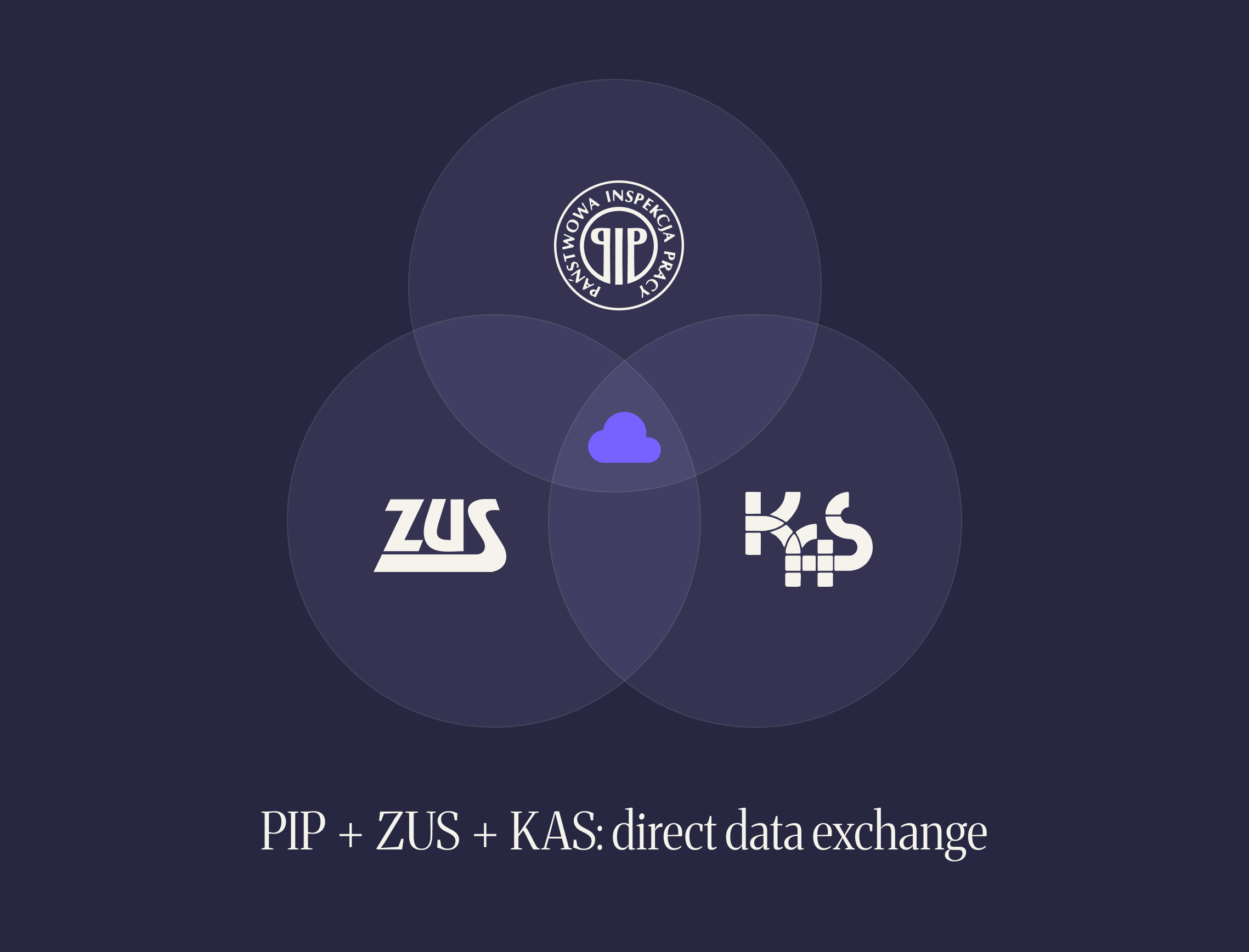
The era of random "complaint-based" inspections is a thing of the past. The reform introduces a system of automatic data exchange between three state authorities:
- PIP (National Labour Inspectorate);
- ZUS (Social Insurance Institution);
- KAS (National Revenue Administration).
This means a transition to a model of digital supervision. Algorithms will be able to automatically identify companies whose payouts on B2B contracts or umowy zlecenie suspiciously resemble the fixed salary of a full-time employee.
In addition, the possibility of remote inspections is introduced, which significantly increases the coverage of the inspectorate.
Signs of a "hidden" employment contract
The inspectorate will look not at the name of the document, but at the actual working conditions (according to Art. 22 of the Labor Code of the Republic of Poland).
Your contract is at risk if the following are present:
- Hierarchical subordination: execution of direct orders from management.
- Time and place control: the obligation to be in the office or online at strictly defined hours.
- Personal performance: the inability to delegate tasks to a subcontractor (critical for B2B).
- Company tools: using the employer's equipment and software without having your own economic risks.
New fines: liability has doubled
The reform significantly increases financial pressure on violators. Fines for key articles are almost doubled:
- For replacing an employment contract and violating employee rights: from 2,000 to 60,000 PLN.
- For repeated or gross violations: up to 90,000 PLN.
- For an attempt to "take revenge" on the employee (for example, terminating the contract immediately after a PIP inspection): a fine of up to 60,000 PLN.
In addition to fines, the PIP decision automatically obliges the employer to additionally charge all ZUS contributions and taxes for the entire period of the recognized employment relationship.
How to protect your business?
The state effectively transfers part of the judicial functions to the administrative sphere, lowering the level of procedural guarantees for businesses.
In these conditions, the only way to avoid huge fines is a preventive audit.
ELPOFFICE specialists will help you:
- Analyze current B2B contracts and Umowy Zlecenie for compliance with the new requirements.
- Identify the risks of "hidden employment relationships" before they are detected by the PIP algorithm.
- Develop a strategy for transitioning or adjusting cooperation conditions within the 12-month grace period.
Contact us for a consultation so that your business in Poland remains safe under the protection of professionals.
